Monday, April 23, 2007

The Beat Q&A: 2Mex of The Visionaries


Los Angeles MC 2Mex is not content with simply delivering a message in his music. He uses it as a tool to reach out to his community.

A member of the Visionaries crew, the underground veteran has made his mark as one of the more progressive rhyme slingers on the West Coast. None other than Snoop Dogg has recognized the real, shouting out 2Mex and the Visionaries on the mixtape/demo cut "My Peoples."

But aside from his status as a MC on "Hip-hop's Bleeding Edge" (as he was billed in URB Magazine), 2Mex is a community-oriented artist who takes time out to speak to young people whenever the opportunity arises. 2Mex took some time out to talk to "The Beat" about his community work, his music, and what kept him so grounded in the first place. The following is an excerpt.

Q: First thing I want to do is say thanks for taking time to talk to "The Beat."

A: No worries.

Q: What have you been involved in the community as far as outreach work?

A: One of the things I've been helping out with is I go to classrooms (and) talk to kids. I go to high schools and junior highs and I talk to kids and let them know that I'm just like them. I'm from the community and here I am a Chicano, just like them, that's out there doing something for myself. Owning my own business that's successful with the music thing and without having to succumb to dealing with this corporate situation, and deal with building it from the ground up on a hands-on basis, you know. And just giving them some hope, showing them that somebody from the neighborhood made it, you know. We get to travel the world and do what we do because we work hard at it and we're dedcated to it and we look just like them, you know.

Q: What community were you raised in?

A: I was raised in Mid-City Los Angeles, a predominantly black and latino neirghborhood. It's kind of by South Central LA. I was born in 73, so I grew up in the late '80s, you know.

Q: What were some of the issues you faced growing up that you can relate with the youth?

A: Basically the issues in the 80s, there were a lot of race issues and gang issues. I grew up in an area where there were a lot of gangs, from 18 street to black gangs like Playboy Gangsta Crips. There was a lot of black and Mexican tension, you know, the gang culture of LA. The negativities of stress from the police, the crack era — I grew up in the crack era in LA. I saw a lot of people deal with and I experienced a lot of police brutality personally, being harassed by the police personally, you know.

In Mid-City, it was a hotbed of activity, growing up in the neighborhood where I grew up. Gangs, prostituation, drug dealing and stuff. I just let (the youth) know. I go to the projects in East LA, Maravilla projects, from everywhere. My group, The Visionaries, we went to Riverside, and we've gotten to the point where we get to perform in the schools. Talk to the kids, let them know, even though the music we make isn't that radio bullshit, talking about materialism and disrespecitng women and things like that. We just show them even though we're not on commercial radio, we're good. We can manifest a life and do things, you know, get things done and be successful.

Q: What types of influences did you have growing up that kept you focused?

At a young age, what kept me straight was my parents, you know what I'm saying. When I was young, I had a church influence for a while, it kept me strong. Until I got to the age of 16 or 17, when I got a job and stopped going to church and started working. I had a strong foundation. A lot of my homies were from 18 Street and different gangs, and they were getting caught up in that.

When the L.A. riots kicked off, I wanted to loot — bad. My friends were looting, things. I'm not getting into it, but people had plans when that shit cracked off. I wanted to be there so bad, it got to the point where my dad pulled out a gun on me and said “You're not going anywhere,” and he locked the door. He didn't let me do anything. That's the type of tough love that saved me. I didn't think about it at the time.

At those little critical points, when your family could have let you run wild and make mistakes, my dad was strong...

Q: Do you share that stuff with the students you talk to?

A: As deep as we can get into it. A lot of it too becomes, you know, music talk and showing them (what I do). A lot of it is about the music and showing them you can open your brain up. One exercise we do with the kids is freestyle with them, and show them in order to do wonderful things and be successful, you got to have a vocabulary. You got to have intelligence. I try to show them with intelligence comes money. If you're intelligent, you can make money. You can succeed in this world and get those things that you want, in the right way.

My parents broke their back for me to be able to (make a living). I haven't had a job in six years. Even though I'm not rich at all, I've been successfully living off the hip-hop music since the year 2000, you know. But it wasn't (always) like that. It took me another like, 10 years, almost, to get my act right. So this is just to show them. My dad broke his back so I could find out to survive with my brain, and here's their chance to survive with their brain.

There's a lot of little things like that, but a lot of (stuff I talk to kids about) is about the music. Trying to open up that chamber of intelligence. A lot of these, without disrespecting, but too many of these rap groups that are Latino, when it comes to rap music, their art form isn't necessarily about intelligence, or being wordsmiths, or building a vocabulary and being progressive with the hip-hop. Theyre just telling ghetto stories. And that shit's dope, you know, they're talking real talk. It's real talk shit, which is fine.

I don't portray myself to be a gangster. I never was a gangster. I grew up in a gang area, but I never was a gangster so I know to never act like one, you know what I mean. I don't front, but it's understandable that kids who do live that life, they tell those stories. But I'm there to show them that there's another way, another progressive way, and it doesn't have to be just like that. There's a balance. Being a Mexican hip-hop artist doesn't mean every song has to be about that.

You can talk about anything. You can talk about the world, but you have to go see it. I've performed in 40 to 45 of the 50 states. I've performed in Cuba, Mexico, Japan, Amsterdam, Denmark, Czechoslovakia, Germany, Australia, England, Spain, France.

I've seen the world and I have a bigger range, and I'm just showing them that they need to go get these things and have that worldly range and think outside the box. I was talking to a kid the other day, he said “I'm from Santa Ana. I was born in Santa Ana, I'm going to die in Santa Ana, and I was like "Damn." I forgot there were people like that, and I was like, "That's what you want to do, huh?" And just, really, that mentality of I only exist in this neighborhood because I might have some power, some accolade there. But there's so much more to it.

Q: Is there any one group or organization you work with in particular?

A: To be quite honest, I'm just a floating entity. People reach out to me. From MEChA organizations to Divine Forces people, it goes on and on and on and on. I need to gather some of that info, because I look at this as an everyday thing. I float around.

Read more!

The Beat Q & A: IceCube


It's an interesting world we live in when West Coast rapper Ice Cube is making a case for father of the year awards.
But the hip-hop generation's version of Bill Cosby seems to be doing just that with his turn in the movie “Are We Done Yet?,” the sequel to the surprise hit “Are We There Yet?” In the second installment, the man who wrote the song “F--- The Police” plays a newly-married stepfather of two, with a new baby on the way. The family moves to the suburbs and hilarity ensues, with Cube's signature scowl now being used to awkward comic effect.
The 37-year-old South Central Los Angeles representative will perform his gritty gangsta gospel Saturday, April 28 at The Catalyst nightclub in Santa Cruz. Fellow West Side Connection rapper WC will open up.
During his 20-year career, Ice Cube (real name O'Shea Jackson) has stamped his presence as one of the avatars of the gangsta rap music, but his movie career is what helped him become a household name. “Are We Done Yet?” represents his third movie franchise, along with the “Friday” and “Barbershop” series. All of the projects saw Cube take on double duty as lead actor and producer.
Ice Cube took time time out to talk to "The Beat" on the release day of his new film. He spoke about his movies, his music and what he really thinks about journalists who ask him how he went from G-Funk music to G-Rated family movies:

Q: Thank you for taking the time to talk.
A: No problem, no problem.
Q: I wanted to start off with your movie career and move backward into the music. You're on your third movie franchise now with the “Are We There Yet?" series. Is this something that in 1991, when you took your first acting role (in John Singleton's “Boyz N Tha Hood”) that you envisioned for yourself?
A: I knew I liked doing both (acting and rapping), and it was a good experience being in “Boyz N Tha Hood.” I knew I wanted to do more movies. I really didn't start thinking about sequels as much until I did “Friday.” After doing “Friday,” people were constantly asking for another one. I knew Chris Tucker (Ice Cube's co-star, who played the character Smokey) didn't want to do it, so I was a little reluctant. But we got it done with Mike Epps and it kind of started another trend for me.
When “Barbershop” jumped off, it was only natural because people enjoyed the movie enough to do a sequel. The same with (“Are We There Yet?”). People enjoyed the movie, and it's kind of our job to give them more of it.
Q: The way I look at it, the maturation of you, not only as a performer, but as a person, has occurred with each movie. “Friday,” you were in the ’hood. “Barbershop,” you're a young businessman. In “Are We There Yet?” you're a family man. Do you see any parallels between Ice Cube, or O'Shea Jackson, the person, and Ice Cube the movie figure that's being personified on screen.
A: No, not at all. During "Friday," even though, you know, I'm in the ’hood, but at that point I got a family. I got kids. I'm married and I'm running my own business. You know, I don't really parallel that. If I created my real life around my movie life, my movie life would be late.
My kids are grown . . . I mean, not grown, but teenagers, except for my last son that's 6.
I don't really look at it like that. I just play each character as it's supposed to be played. I'm not trying to connect movies with my real life in no way, no how.
Q: Do you get a lot a lot of questions about why you're doing family fair now, and going from being the personification of being a gangsta rapper to doing G-rated family films.
A: I get asked that a lot.
Q: What's your response?
A: You know, people really got the word "gangsta" flipped. If you ask any gangsta what the necessities of life are, they'll answer like anybody else — cars, house, family, you know. For gangstas, it ain't like everybody want to be Scarface, just by yourself with a mound of coke in front of you. That's not the reality. A lot of people that call themselves gangstas still want the American dream like anyone else. I don't even know if you can call it the American dream, just pursue the life dream.
When people ask me those questions, I think they're dumb, because a movie is just a movie. People try to make me be the characters (I play) in the movies, but that ain't it. That's acting right there. Those are made-up people. All I can do is do my best in the part. I ain't really trying to appease to no crowds and I'm not trying to give no images. I I'm just trying to be myself.
Q: The last movie you directed was “Players Club”?
A: Yeah.
Q: You've produced a ton of movies since, but is there any part of you that's itching to get back in the director's seat?
A: Yeah, it is. But when you get into the director's seat, you're kind of locked into one project for a long time. I like to do a lot of different things, so producing allows me the flexibility to be on several different projects a year. As soon as I direct, I'm going to have to put everything aside and just focus on the film from start to finish. Because more than likely I'm going to be directing, producing, writing and probably would have a part in the movie.
Q: Is there any one dream project that would prompt you to jump out and focus on it as a director?
A: I mean, it's a lot of them (laughs). I got a lot of great projects, but we'll see.
Q: Getting back to the music, last year you released “Laugh Now, Cry Later,” your first album in six years.
Q: How much of a transition was it to jump back into the recording process and promote the album, distribute it yourself and go on tour?
A: Seamless . . . I could do that with my eyes closed, really. That's a part of the business. The movies is what you got to work at.
Q: Talk about the Santa Cruz show. You came out here two years ago?
A: Two years ago, I think.
Q: What can the fans expect?
A: They can expect 20 years of hard-core hip-hop, West Coast gangsta music. I'm going to try to run the whole gamut and do a lot of songs . . . I just go through the gamut. People appreciate my show because it's what hip-hop used to be. High energy. It ain't no band, just my DJ, turntables and a mic, doing what we do.
Q: I read a recent article where you had some strong critique of the current hip-hop landscape. Can you elaborate on your viewpoint on the state of hip-hop?
A: Hip-hop has always been threatened by the establishment, even while it looks like hip-hop has become a part of the fabric of America. It still is an outlaw kind of music. I think hip-hop is suffering as well as all music is suffering.
Once they stopped teaching music in schools and you got the downloading, artists losing their careers, music is suffering. It's a lot of technology out there, but will it be anything to play on your iPod other than old stuff, in the future? We have to look at that and make sure our artists are benefiting off of the music they are making, whether it's hip-hop or any other type of music.
Q: You were named in the top 10 list of MTV's greatest MCs of all time. Where do you see yourself in that canon of the all-time greats? What does it feel like when folks break down those type of lists and include your name?
A: It's always fun to see where you're going to land at, but it holds no merit to me on where I think I am, you know. My career ain't over, so I don't know where I am right now. I still got a lot of work to do, I figure.
Q: What have you not done yet musically that you think you can still accomplish?
A: I ain't changed the world yet. Until I do that, I still got work to do.
Q: What to do you think the fans expect of Ice Cube, musically, at this point in your career?
A: I think they expect quality. I think they expect new direction, new concepts, a little bit of something they didn't know. Hard-core West Coast (gangsta rap), always representing it, you know. I just think they look for quality when it comes to me.
Q: You started out more than 20 years ago. You're now playing to what, a third generation of rap music fans? Is it difficult to stay relevant given your veteran status?
A: I do records for my core base. There's still a rap fans out there that are, you know, my age wanting intelligent rap. They don't want the new dance. So I cater to those that's just been down, that still love music, still support music. So to that audience and everybody else that is just basically, you know, on the fence, kind of, that still listen, that's just gravy. Know what I mean? That's just gravy. But I don't consider them hard-core Ice Cube fans, they're just hip-hop fans. I can't bank on what they like and what they think. I just got to deal with people that like my music.
Q: As far as regions are concerned, is the West Coast still prominent in the rap universe?
A: Yeah. Oh yeah.
Q: How so?
A: We still support our own artists. That's more than I can say for New York (rap scene). They ain't even supporting their own artists back there. We still go buy The Game, we'll go buy E-40, we'll go buy Snoop, Dr. Dre, you know. We'll go buy Too $hort, you know what I'm saying, and some of the newer dudes. We'll go buy them, support our own. So the West Coast is alive and kicking. That's how I'm able to come out with WC's album in August. It's called “Guilty By Affiliation.”
Q: Are there any projects you need to plug or anything you want folks to look out for?
A: Of course I just mentioned WC's new record, but then look out for my new album this fall called “Raw Footage.” And then I'm doing a movie next month called “First Sunday.”
Q: What's that about?
A: It's me and Mike Epps. We crazy enough to rob a church.
Q: Ice Cube robbing a church? So you're going back to the gangsta way, but it sounds like a comedy if Mike Epps is in it?
A: It's going to be all of that.

Read more!

Thursday, April 05, 2007

The Beat Q & A: Mic Quin


Michael Quintenilla, aka Mic Quin, is your prototypical hustler/rapper. Working a day job at an insurance agency and pursuing a career on the microphone, he brings a steady business approach to both professions.

But Mic Quin knows that in order to get ahead, you have to be on your grind 24/7. Whether it's arriving to an interview stacked with promo material, or paying extra money to have big name Bay Area artists featured on his album, it's all a part of the game.

Mic Quin will perform April 14 at the Krazy Koyote in Gilroy, opening up for old-school rapper Candyman (of "Knockin' Boots" fame). He will embark on the Street Low Magazine car show tour beginning May 6 in Costa Mesa.

The Salinas rapper took some time to talk to The Beat about his album, "Got Some For Me... The Beginning." Released last year, it features artists like Mista FAB, J-Diggs, and X-Raided. Production was also provided by local heatmaker Yun-Gun. The following is an excerpt from the interview.

What album are you promoting right now?
The album is one I dropped 4/20 of last year. It's called “Got Some For Me... The Beginning.” I feature heads like Mista FAB, Numskull of The Luniz...you know, Dubee, J-Diggs, I got an underground track, X-Raided. He's an indepeneent loc, being locked up and all... We network with Sacramento, Vallejo, EPA, everywhere, San Jose. I'm from salinas, born and raised. I've lived in Concord, and I have family out in the Bay Area, so I'm always out there.

How did you network with Mista FAB?
That was kind of like, beginning hype. When you're first starting, you're hungry, you know. I knew since before FAB even came out that he had potential to shine, that he was the one to be the one. (When I met him) his album was soon to take off, his sophomore album. I met him thorugh my boy Smuggla, he said “Check out my man, he's gonna take off.” This was before the Thizz hype.

I took advantage of the opportunity and networked with him. This was 2002 or 2003. I did a song with him, hooked up with him a while after. I hooked up with him a little after. He charged a little more, but it's all networking. I understand that's what you earn to be in your position, being that rapping is your career for some. Some people don't neet to work the 8 to 5, that's all they do is rap. I'll break off people that I feel they deserve it, and of course I know when I'm getting hustled.

I've worked with (Mista FAB) two times. I see him every so often at shows. He's doing his thing, but I'm focusing on Mic Quin. I got my own camp out here.

Talk about the importance of getting a high profile artist and paying money to have them appear on a song with you, especially for a young artst such as yourself.
As far as that, all I can say is it takes money to make money. Then again, you have to know the point where someone is ripping you off. I'm a hustler. I've been a hustler since I was young. Whether it's riding dirty or doing the clean, 8 to 5 thing, you know what I mean? The streets and the game ain't nothing new to me, especially the rap game. Networking with these heads I thought really beneifted me, as logn as I'm working with my people here. Like the famous saying, You are who you know...

How many copies of the album were you able to sell?
At this point, I'm an independent artist. Whoever wants to work with me, whether its' a (chain) store or mom and pop store...I'm working on getting it in the Warehouse. I'm in all the mom and pop stores, from Rasputin's in the Bay to Street Beats in Salinas - that's our Central Coast urban music supplier.
I was recently in touch with Street Low Magazine, putting adds in their magazines. I'm doing shows that they set up, doing super shows.

How did you make that connection with Street Low and what's the deal with the Super Shows?
I've been in touch with them for a couple of years now. When I first started messing with them... I started off with vendor booths. Me and like four or five other artists, depending on who wanted to get in... we'd get booths, sell our CDs. We'd be kicking it out there all day, whether we were performing or sitting at our booths...

It's kind of hit and miss, depending on who's out there and people don't want to spend. I do a lot of giveaways. It's good promotion. I can give out CDs and it's nothing.

When do you go on tour?
The first show coming up is in Costa Mesa, May 6. That's down south. It's pretty big. I've done vendor booths with them, and I've seen how the shows turn out, they're real good. I've done other shows with (radio station) La Calle, out in the Fresno area - it's like the Hip-Hop y Mas station out there. I hooked up with them through my homegirl Monie The One and Only over here. She set me up with a few shows out there in Fresno. We did a big ol' festival, thousands of people. We sold a couple hundred CDs off top.
Whether it's at a bar here locally in Salinas, the Crazy Coyote in Gilroy, Club Caution in Santa Cruz, or house parties. We used to rock the house parties with hundreds of people there. Until the cops break it up, you know how it goes


One thing I always think is lacking in hip-hop is the performance. How do you approach the shows?
Like with anything, whether it's putting together my album, you have to put in 100 percent. If you dont' think something is right, you have to re-record. You do a certain amount of recordings to get it right. You set up your show disc to perform. When I'm out there with hundreds of people, I get nervous. But I get out there and do my thing because this is what I'm hungry for. I've been doing it for a while and I really want to take off with this.
Getting back on the networking part, as well as these people, I'm also doing stuff in my area. Whether it's Yun Gun, AK,
Big Spanky, Fury, my boy Sup-1, Alcatraz, Dre Nitty, my boy Smuggla's from here, my boy Gemini. Salinas, Monterey, Soledad, people out in Greenfield, people out in Castroville. Everyone is networking. I'm a Central Coast representative. The Bay Area's got their Hyphy movement, and the stuff that they are doing is taking off, you know what I mean. We are incluced in that because we are next to the Bay. But we're Central Cali and I'm trying to get Central Cali taking off. Being Latino too, I'm trying to bring Latino's some shine as well.

Read more!

Wednesday, March 14, 2007

The New Style - Reviews of Busdriver and K-Os

Busdriver looks confused, as the little tweety bird tells him to burn things.

As hip-hop music continues to splinter off into subgenres (indy rap, coke rap, hyphy) and flavor of the week fads (snap music, two-step music, hyphy), the ever evolving world of alternative rap music seems to be filling the creative gap left behind by the competing commercial forces.

Alternative rap music, one of those plastic labels journalists like to use to pigeon hole that which they don't understand, is privvy to the shortcomings of any other style of rap: record label branding, generic posturing, fickle fan followings. The avatar of the alternative rap universe would seem to be De La Soul, with subsequent offerings ranging from A Tribe Called Quest and Digable Planets (dope) to P. M. Dawn, Spearhead and MC Paul Barman (kinda ehh).

The set-up for alternative rap music is it doesn't necessarily conform to the street-approved brand of system-thumping, 'hood-credible hardcore rap. Alternative rap can be conscious, space-age, or outright weird.

Two albums released in the past two months have proven that, despite the whole "hip-hop is dead" amalgam promoted by Nas, Andre 3000 and the like, there is some creativity left in hip-hop.

Canadian rapper K-Os's new album "Atlantis- Hyms For Disco" and Los Angeles bohemian MC Busdriver's new album, "Roadkill Overcoat," are food for the famine. Each album takes the best elements of alternative rap and turns them into groove-heavy, lyrically challenging displays of where the music can go and, more importantly, grow.

K-Os is the more commercially viable of the two, yet he refuses any sort of cliches. On the song "Aquacity Boy" he defiantly pronounces a familiar mantra - "This ain't rock n' roll/ Cause the rap is in control." This while a sinister guitar riff and fuzzy drums, ala "Check Ya Head"-era Beastie Boys, bang along.

K-Os is a gifted vocalist, with a nasal voice that can channel Percy Sledge, like on the slow-burning "The Rain," or Morrissey, as on the new wave-y single "Sunday Morning." His singing is a bit thin, but endearing in that indie-rock sorta way. Where other alternative rap cats have fallen short on switching between rap and song (Mos Def, Q-Tip, and Andre 3000), K-Os finds a balance.

On the other hand, "Roadkill Overcoat" is a bit more advanced, a bit more abstract, a bit more hard to follow. Busdriver is a second-generation member of Project Blowed, the LA crew/movement founded by Freestyle Fellowship, a legendary underground crew who have pushed the boundaries of hip-hop to impressive heights.

Busdriver's steez is part Volume 10, the uncanny LA rapper who gave us the hip-hop classic "Pistol Grip Pump," and part Gift of Gab, the breathless rhyme slinger from Blackalicious. Add in some poignant new wave crooning and you've got one of the most unique voices in the game right now.

On the opening song "Casting Agents and Cowgirls," Busdriver rides a pulsing beat with manic glee, like a slightly demented circus announcer. The album is full of these sometimes cartoonish, but always engaging soundpieces. When he's not going for broke, he's experimenting on a synth-heavy banger like "Sun Shower." The song starts off like a mid-80s UK pop song, but Busdriver's mournful singing and shuttering lyrics gives it an updated bend.

On the moody "Mr. Mistake (Bested by the Whisper Chasm)," Busdriver manages to slow down the tempo without betraying his hyperactive flow. He also displays a song writer's lilt, with lyrics like: "I got people to disappoint/ I got mistakes to make/ How can you believe I'm not a waste of space."

What makes these two albums so distinct in the hip-hop market is they're written by song writers who aren't afraid to give their all. In the muddled hip-hop universe, it's a shame that these guys have to be referenced as an alternative, rather than viewed as the norm.

Read more!

Tuesday, March 13, 2007

Amy Winehouse - Scary Goth Girl Soul


Amy Winehouse is one scarey looking chick. No joke.

She rocks more black eye makeup than your average goth girl, to paraphrase one Associated Press write up. She rocks tatoos of bare-breasted women (big breasted at that) on her arms. Every video or public performance she looks like she just tossed up a 40 oz. and smoked a few blunts.

One other scarey thing about the Brit-soul diva - she is scarey good. Down right frightening.

Peep her neo-Ronnettes steez on the addictive song “Rehab,” where she channels Martha Reeves and the Vandellas if Martha was piss drunk. “They tried to make me go to rehab, but I said no-no-no/ Yes I've been there but will I go back?/ No-no-no.”

It's Phil Spector wall of sound rock music, but with 100 times the attitude (and that's saying something).

Winehouse has been making plenty of noise across the pond, her drunken antics and all to her own style propelling her to the tabloid headlines. She's called out Dido and Kylie Monogue as farces, and even experienced public meltdowns to boot.

But it's not her on-edge persona that has made me a fan. I've been driving my girl crazy bumping "Rehab" and "You're No Good," her two ready made singles, for a few weeks now. But it's the moody stuff that gets me on one.

The uber-dark "Back to Black" is a desolate, clangy, hypnotic quiet storm of illicitly paranoid love affairs. The way she measures the chorus is incredible - "You go back to her/ and I go back to... Black." The dead space works so perfectly, you fall into the black hole right along with her.

Winehouse has been getting the royal treatment on okayplayer.com for a few months now. Seaside b-girl A. Lee co-signs on her talent. She killed it on Letterman last night. Her sophomore album "Back to Black" debuted today in the U.S. Do yourself a favor and cop that. Don't be scared.

Read more!

Wednesday, March 07, 2007

"The Beat" Q&A: Selau


Island girl beauty mixed with hip-hop soul talent, that's what makes Selau a unique fixture in the Bay Area rap landscape.

The 25-year-old singer has a hot radio single, "A Man That Goes" and is on the verge of signing her first record deal. She started out singing hooks for Keak Da Sneak and The Team. Now, she's set to take the spotlight for herself.

Selau took time to talk to "The Beat" about her music, her ethnic background, and the times when she's caught herself starstruck. She will perform a free concert Friday, March 9 at Club Octane, 321 Alvarado St. in Monterey. The show is part of a promotion for Salinas radio station Jammin 97.9. For more info, visit the Web site www.myspace.com/jammin979.

How long have you been singing?

My whole life. My dad was a singer. It was something I did, just watching him. I guess it was in my genes. You see your dad do something, you want to do it.

He was a reggae singer?

Yes. It was mainly on the islands (of Samoa). I was born in the islands. When we came here, he had a studio in the house.

When did you come to the United States?

I moved to the states when I was 7. We moved around a lot. It's kind of weird. I lived in both San Francisco and Oakland. It kind of works for me, because sometimes the city and the town are so separated here, but I got the best of both worlds. Both of them get mad respect.

When did you start getting serious about your music?

I always was very serious about it as a kid. I used to enter every talent show. I always secretly signed myself up for it. It kind of was something my parents didn't want me to be, so I did it undercover. I knew it was what I wanted to be. Nothing could stop a kid with motivation.

I think it was in junior high, that's when I started. When you do a lot of talent shows, they start to say “Oh, that's the girl that sings.” That was my label...
Everybody has a cousin or friend who is a producer, and has their own label, and I've done it all. I've done my work. I've sang on some of the, let's just say, not so hot beats, just to do it and have a part in music.

How did you get your break?

From local rappers around my neighborhood. Just singing hooks for them. It escalated to being not just my neighborhood, but to the whole city, and to the whole Bay. That's how I got my start, was singing hooks. I got my big break with Keak. From there, it was like "Who sang that hook?" It escalated to that point, from singing one little hook.

Have you been starstruck?

It happened to me twice. I did a show with Slick Rick. I mean, come on, he's one of the founders of what I do. When I met him, I didn't want to talk because I didn't want to say anything stupid. I was silent the whole time. It was great to see him because he was so humble, even though those songs are older than me, he still rocks the house. He didn't have the fancy stuff around him, no hype man or back up singers. It was him and the mic. I told him, "Man, I want to do music like that. I want to do music that 20-30 years down the line is still hot."

For this dude, who has hits and hits and is a founder, to be so nice, he did not look frustrated one time. Me and my girls were bugging him and he was so nice.

I did a show with my band - I'm in a band too. Chico DeBarge was in the front row. I mean, come on, he's right there. I had to look around, I was like "Oh my gosh."

After the show, he was walking straight to me. I kind of looked the other way, I didn't want to get moded and assume he was coming to talk to me. But he came up and talked to me! It was really nice because he also had some good advice. He said basically, you have such a sweet spirit, I can tell. He said don't let the game ruin that for you.

Do you use your Pacific Island heritage to help project your image?

I don't think that I use it because it's already who I am. It's not anything I intentionally put out there. My name, when you hear Selau, you have to know that's not your average name. It was important to keep my name, because I was asked to change my name so it would be easier for people to pronounce. They were like "I can't see people calling in to request Selau." I said "If people can pronounce Schwarzenegger, and he got to keep his name, then they can pronounce Selau."

As soon as they hear that name, they know it's an island girl. I have a song that's been getting some burn, it's called "Island boy." I mention all of the islands in there, just to show some love, to let them know who I am. I'm not trying to be anything other than who I am.

Every performance, there's always a Polynesian in the audience. We have our little island things. We scream certain things when we see each other. When they tell me that their little sister or brother loves me and looks up to me and they know they can make it because of me, I take it very seriously.

As an island girl myself, there wasn't anybody I could identify with growing up. Now, it's like, Oh my gosh, there's a Samoan girl singing, I can do that.

After shows, we'll have meet and greets, and someone from the islands will be out there. It's like mad love and I feel it. I definitely want to make sure I do them proud. I think about everything as far as image. I have little island girls looking up to me. I want to make sure that their mom and dad aren't ashamed of me and want to buy my album.

Read more!

Sunday, March 04, 2007

The End of An Era?

Hip-hop music is in a commercial and creative rut. Some wonder aloud if the music is dead.

I say, that may be that's a good thing.

Then again, I can't say that hip-hop is dead because it continues to be a pop-culture force. Unfortunately, that influence has become harder and harder to defend. Do you have any idea how hard it is to come up here and post three times a week, singing the praises of a musical genre that nowadays is only good for strip club anthems? (I never want to make it rain, and I don't want to be there when someone does).

Hip-hop is six steps away from death, but even then, according to who? If it stops being the corporate money maker it once was, will it be buried unceremoniously? If no more Public Enemies or Tribe Called Quests emerge, will the music's revolutionary verve get lost in a cloud of blunt somke?

Nope, because first and foremost, hip-hop sets the trends.

Hip-hop is the pulse of the streets, whether their paved with gold or gutter residue. From the burbs to The Bronx, hip-hop is on the lips of the children who foster cool.

It's scary when the music stops meaning something (hip-hop with substance is almost dead). It's a frightening prospect to the powers that be when they start losing money (which I could care less about).

But the culture will not die anytime soon. For all of it's drawbacks, hip-hop is still the beat on the street (gosh, that sounded corny).

The DJ never dies, thus, the hot wax will continue to get bumped in the club.

As long as nice cars with loud sound systems are in vogue (and isn't that the American way?), hip-hop will provide that boom-bap.

And as long as American youth continue to embrace a cool like dat aesthetic, hip-hop will provide the attitude, the rebellion, the necessary swagger.

What needs to change is the overarching principle that if it's not on crack, it's whack. If the violent and over-sexxed imagery is not what's selling, then maybe it's not what's hot in the streets. Can we get some substance on the block, por favor?

Can we get a sense of dignity back in the game? Not saying everyone has to come on some positive vibes, but how much more dying does the culture have to promote in order to turn a tidy profit for rich white dudes?

At what point do we realize that the suffering being commited to record and put forth to the public is no longer a reflection of what's going on in the ghetto, but rather a single-minded excuse to exploit the lower-classes? As much drugs, gunplay and sex that happens in the 'hood, you'd think there was some room to talk about the good times a little more, without having to degrade a woman or a race along the way.

Hip-hop is far from dead, but it may need life support. If anything, the band-aid over the shotgun wound is starting to peel off, and it's time to take a better approach to recovery.

Read more!

Friday, March 02, 2007

What's Beef: Carlos Mencia vs. Joe Rogan

I'm tryna' kick the shit you need to learn though/ That ether, that shit that make your soul burn slow


Beef is good business in hip-hop. Careers are made and broken by it. It's a spectacle like the WWE or Ultimate Fighting Championship.

In stand-up comedy, the big beef is between Carlos Mencia and Joe Rogan. It came to a head last month when Rogan was hosting a comedy show in LA, and while introducing an act, he referred to Mencia as "Men-Stealia," alluding to the charge the Mencia is a noted joke thief within the stand-up circuit. Mencia happened to be in the room, didn't take too kindly to the diss, and went on stage to address the situation. This set off a shouting match witnessed by a few hundred people live at a comedy show, and a few million who have since watched it on the internet.

Rogan, the host of Fear Factor on NBC and a veteran stand-up comic, has been riffing on Mencia, host of the Comedy Central hit "Mind of Mencia," for a long time. The internet beef has been buzzing for the past few weeks and, after a local writer mentioned it in his column tagline, I decided to check it out.

The clip is 10 minutes long, and can be viewed here


Basically, it's a tightly-edited propaganda piece produced by Rogan, with clips of the infamous Comedy Store show down mixed with pointed text aimed at punking Mencia.

During the video taped standoff, Mencia calls Rogan a "little b----" and says nobody cares what Rogan is saying. Rogan appears to have the crowd on his side, particularly when he gets on the mic and responds to Mencia. Rogan gets some good digs in about how Mencia is a good performer who doesn't write his own stuff.

Mencia tries to respond in his loud-mouth, reactionary manner but it doesn't work. He's too much on the defensive. Rogan specifically cites a joke that Mencia stole from another comic and Mencia denies it. That comic, a jewish cat named Ari, comes from the crowd and tells Mencia straight up that he stole the joke from him. Mencia is visibly stunned.

In comedy terms, Rogan ethered Mencia. I'm sure he can go back and high five his fellow comics, all the ones who shluck from gig to gig because they want to avoid real work. But that's about it.

Ultimately, only comics really care who steals material and who's truly original. The general public doesn't care. Case in point: when Mencia's show debuted two years ago, it was the second most popular show on Comedy Central, behind only South Park. It beat out The Daily Show and Colbert Report.

Whereas Daily Show and Colbert thrive on being the thinking man's funny, Mencia's low brow schtick has easily outpaced his colleagues.

Mencia may have taken the L on the comic circuit, but that's about it. His live shows will continue to sell out. His television show will continue to do well in the ratings. Mencia is a lowest-common denominator comic to begin with, and his brand is nothing that would appeal to comic snobs. He doesn't care either way.

Meanwhile, Rogan will continue to host UFC cable tv filler and whatever other frat boy side gig he can muster. Rogan recently wrote on his blog that his agent dropped him. He also admitted that he was fortunate enough to get involved in the beef at a point when he is established in his career. If he was a beginning comic, this would have ruined him.

It's to Rogan's credit that he is playing up the beef, in hopes that it will get his name out there. In that sense, he's taken a few pages from the hip-hop handbook. Rule No. 187 - Beef is always good for business.

Read more!

Tuesday, February 27, 2007

The White Rapper Show: Best. Thing. On. TV.


White rappers all across the suburbs probably hated VH1's reality TV series "The White Rapper Show," and it's understandable.

Here was a show that seemed to bypass selecting MC's with discernable talent in favor of characters, and exposed every single stereotype that has been attached to white rap artists since Vanilla Ice bought his first can of bleach. Monday night's season finale pitted the final two contestants on the reality-show competition against one another, with a satisfying if not anti-climatic finish.

The show's premise - 10 white rappers from across the nation are chosen to live in the Bronx, the birthplace of hip-hop, to get a crash course in hip-hop culture and compete against one another for $100,000. Along the way, the contestants/characters are subjected to a number of physical, creative and racially charged challenges, from going through their ethnically-diverse neighborhood to earn street cred to filming videos and recording music to competing on a television game show that challenges their knowledge of black stereotypes.

The cast members themselves were an oddball, sometimes cringe-inducing assembly of white rapper personalities - a PhD candidate/white guilt tripper named Jus Rhyme; a Queens, NY-bred, n-word spouting, gutter princess named Persia; a sweet but awkward tomboy named G-Child (who wore her hair like Da Brat and openly admitted to idolizing Vanilla Ice); a dirty South, grill-sporting good 'ol boy named Shamrock; and a wide-eyed, seeming clueless yet fascinatingly ambitious hip-hop persona named Jon Brown (representing the suburbs of Davis, California, hollaback!).

Along the way, they were sheperded by one of the most legitimate hip-hop personalities from the golden age of rap, MC Serch (former member of the rap group 3rd Bass and the man who helped discover and launch the career of Nas). It made perfect sense to have Serch as the show's host. As a white rapper during the early 90s, Serch was on the frontlines to combat the inherent fraudulence of acts like Vanilla Ice, famously beating Mr. Ice (played by Henry Rollins!) in effagy during the video to "Pop Goes The Weasel."

Back to Monday's finale, I couldn't help but root for Shamrock as he battled Jon Brown. Shamrock seemed like a cool, down to earth guy who I might want to hang out
with and have a beer. Brown, on the other hand, immediately set himself apart from his fellow white-rappers during the show's pilot episode, declaring he is not a rapper, but an "entity."

Brown's schtick revolved around a "company" he founded called "Ghetto Revival." The principals were curious and a bit undefined. A "Ghetto Revival" was somehow necessary to unite the masses, under a proclamation of "Hallelujah, Hollaback." That's about as much as I could gather from Brown's babble. Oh, and Brown proudly proclaimed himself "King of the Burbs," which was a microcosm for the show's ultimate intent.

Hip-hop, like rock and jazz before it, has been reappropriated by white, suburban youth for the past 15 years. The outgrowth of that is folks like Brown, who log on to the culture and purport to be champions for the cause. Ultimately, their credibility has to be called into question because, unfortunately, of their ethnic background and social status.

Which also brings us back to the reason I would understand white rappers, or white people who like hip-hop in general, would dislike the show. Since hip-hop culture has been reappropriated to the point that white rappers can feel comfortable enough to flaunt their suburban status (like Brown), seeing these seeming charicatures can be a viewed as a threat. Maybe even set the white rapper movement back a few years (making Marshall Mathers hard work all in vain).

A lot of the contestants were lacking in the talent category. Although Persia, Dasit, Sullee, Shamrock and Jon Brown each had a legitimate reason for being there, the rest of the pack pretty much sucked.

To top it all off, the stereotypes of white rappers were on full display - Persia using the N-Word and trying to play it off like it was cool; JusRhyme doing his whole "We are all one people" conscious white MC routine; the british girl who was a fifth-rate knockoff of Fergie from Black Eyed Peas. It could have been called the White Rapper Stereotype show.

The show's producers, Ego Trip, a writing collective that published a dope indy magazine during the 1990s, knowingly put these people on the show because it was more interesting to play on those stereotypes and seach for the humanity beneath the fronting. Besides, who wants to see people with talent compete for a prize? You can watch American Idol for that kind of crap.

Personally, I think the show was one of the best things on television in a long time. Of course, I laughed at the characters, at Persia having to wear a large platinum chain that said "N-Word" after getting busted for its usage (imagine if every white person that said that word was forced to suffer through such a humiliation, Micheal Richards included).

I laughed at Jon Brown's embarrassing "King of the Burbs" boasts.

I laughed when the white rappers thought they were going to the studio to record and wound up on a game show.

But I also got a kick out of seeing these characters reveal their human side. Persia, a hard as they come homegirl, getting humbled after her N-word check. Or G-Child's manic insecurity upon her imminent departure from the show. I really felt sorry for the girl when Serch told her, politely, to step off.

And Monday's finale was cool because Shamrock, a level-headed dirty-south representative, beat out Jon Brown for the title. Although Shamrock's flow weren't ziplock tight (Jon Brown actually had a more polished delivery), Sham held it down for the Dirty and got by with swagger and style. Yes, he looked like Paul Wall with a busted grill, but that's beside the point. When it came down to it, Sham stepped up and did his thing, which was be himself on stage.

That's something any rapper or hip-hop fan can appreciate, black or white.

Read more!

Wednesday, February 21, 2007

RIP Agapito Cabrera: My Tata, My Friend

"Make sure you touch him, let him know you're there," my friend told me before I left to visit my tata, who was sick at the hospital. "If he's asleep, just wake him up and make sure he knows you're there."

I sat next to my tata, my grandfather, Agapito Cabrera, as he rested uncomfortably in his hospital bed. It was a Saturday afternoon, me and him, alone, together. I knew it might be one of the last times I would get to sit next to him. His short, solid frame made fragile by a thin hospital gown. Dark cheek bones and the proudest Mexican mustache I ever knew were reduced to pale flesh stretched ancient from the years, and a scraggly stubble of salt and pepper.

I hardly recognized my tata beneath the matrix of plastic tubes and wire, amidst the techno-mire of heart monitors and bed side remote controls. He feigned sleep in agonizing discomfort, every inch ached. I did my best to help him rest easier - shifted him this way and that, each shift met with a slight grunt of pain. Even in his state, he tried his best not to appear weak.

I could only hope to be so strong in perfect health.


At the same time I was saddened - here I was touching him, letting him know I was there, like I was told. Each time I touched him, it caused some measure of pain.

We couldn't say much during that one visit. The circuit of pain killers and meds kept him in a perpetual wooze, almost fitting for a man nicknamed "Boracho" (Dark humor was one of many heirlooms passed on through my tata's side of the family). Everything was regulated to "How's your Dad" or "How's work," simple guy-talk. His broken English and thick Mexicano accent punctuated each word. In his weakened state, it was a struggle for him to string those simple sentences together. I answered in soothing tones, hoping my words might medicate something.

After our brief conversation, some hospital food and a little more painful shifting, we got to a point where he was able to rest quietly. I sat there and read a magazine, making sure he wasn't alone.

If there's one thing Mexican families are good at, it's failing to leave one another alone. Usually, it's a bad thing - folks all up in your business, can't get a moment's peace. At times like these, when it's a tata and his grandson sitting alone, together in a hospital room, the bugging is a blessing.

I only pretended to read whatever it was I was reading, my gaze shifted more and more towards my tata. The handsome bastard. From him, I inherited a full main of jet black hair, skin dark as an olive, and this proud Mexican mustache on top of my upper lip.

As a child, tata chided me: "Never shave it, mijo. Let it grow naturally." My parents liked to remind me that my tata shaved his only twice in his lifetime: the first time by mistake, the second time when he joined the military.

I stared at my tata through a kaleidescope lens, as the details funnelled through slowly: as a child, his favorite saying to me was "Right on, cachaton." One night, on New Years Eve, after we had watched Dick Clark's ball drop, he offered me my first sip of beer. I was in fourth grade. He laughed when I made my bitter beer face.

On Sundays, my tata and my nana would pick me up after church and take me to McDonald's for lunch, the toy store after, and then to visit my nana's mom, who was in a nursing home. I always liked the toys best, but I remember those nursing home visits the clearest.

My nana would talk with my great-grandma for an hour, and tata barely said a word. I would sit there and play with my toy, oblivious to the Spanish conversation. My spoiled, pocho-behind did my best to ignore the generational exchange between ailing mother and aging daughter. As always, tata would stand by at attention and let nana do all of the talking. Tata was the strong, silent type, as my mom liked to say.

Back to the future, sitting alone, together, in that cold hospital room, tata's face was a telling frame of comfort, the first sign of relief in a long time. I leaned forward in my chair, inched my boday closer towards his. I inhaled his strength, big, long breathes. I swallowed slow, watching him, not wanting to disturb his restless soul. This was not how I wanted to remember him, but I knew I had to do something.

"Make sure you touch him, let him know you're there," my friend said. She was a family friend who grew up with my tias and tios and my father. Any time I saw her, she made it a point to ask how my nana and tata were doing . Now, she spoke from her own experiences with her grandparents, the guilt of watching them leave slowly and not doing enough to be there with them.

"If he's asleep, just wake him up and make sure he knows you're there."

Long years of Mexican machismo, of proud mustaches and boracheras and tata/grandson bonding, of pride and love and strong silence, all of that never made me a callous man. I thank goodness for that.

I reached out my hand toward his hands, which were folded securly at the top of his rib cage. I gently put my hand on top of his, betrayed my friend's advice to wake my tata. This would have to be a non-disruptive moment.

I let my hand rest there for a minute, not sure if tata was squeezing back on purpose, or if he was simply reacting to the touch. Either way, I believe he knew I was there. I believe he knows I'm there now. I believe it all, now.

Thank you, Tata.

Dedicated to Agapito Cabrera, my grandfather. 1924-2007. May you eternally rest in peace.

Amor.

Read more!

Friday, February 16, 2007

Exclusive: Audio Interview with Selwyn Brown of Steel Pulse

The interview with Selwyn Brown of Steel Pulse is set to run this Sunday in The Monterey Herald. It's a good talk about the local reggae scene and Brown's insights into the performance side of show business.

Of course, I like to offer exclusives to my loyal readers, so, to hear the entire interview ahead of the publication date, you can click here. Enjoy.

In the immortal words of Jon Brown, "Hallelujah, Holla Back!"

Read more!

Thursday, February 15, 2007

"The Beat" Q& A: Steel Pulse


There are a few reggae acts who I absolutely must see anytime they come to town. Barrington Levy. Israel Vibrations. And the legendary Steel Pulse.

I'd like to say I could remember every time I've seen them, but when it comes to reggae concerts, my memory gets sort of fuzzy. That withstanding, I can assure you that their live show is one of the most memorable experiences I've been lucky enough to partake more than once.

It's a righteous mix of awesome music and energy and showmanship. Their catalogue is ocean-deep, their craft work brilliant. Live, they manage to make their music sound light years better than their recorded stuff, which is as good as reggae gets, in my opinion.

The band will headline the first day of the second annual Santa Cruz days, Feb. 22 and 23 at the Santa Cruz Civic Auditorium. The band's keyboardist Selwyn Brown was kind enough to talk to "The Beat." Here's an excerpt from that interview:

Q: Whenever you do these festival shows, such as the Santa Cruz Dayz, where it’s five bands on one bill, is there any added pressure because you don't have as much time to prepare?
A: That's a good question because, what it is, it's a different kind of vibe. A different kind of organization. When we're doing our own show and everything is built around us and the opening band, we have time to come in and do our thing. It's hard, on us and even on our road crew. (At normal shows) they have more time to set it up and we have more time to do a proper sound check.
For a band like ourselves, we like to use sound checks as a kind of rehearsal as well. Sometimes sound checks are two to three hours, because we're working on new songs, working on songs maybe we thought we didn't perform particularly well the night before, or maybe there's a particular musician in the band that wants to rehearse a particular song to improve their performance on that song.
But with a festival, we just come in, we don't get a sound check. We get what's known as a line check, where we come in and make sure everything is actually working and hope the crew can get it together in time for decent sound on stage and in the audience. It's a fly-by-the-seat-of-your-pants thing. It's still enjoyable, but its a different thing, a different vibe.

Q: For reggae musicians, it seems like touring on the festival circuit is key to longevity. How tight knit is the community among the touring bands who work the festival circuit?
A: We all get out and hang out together. Which is good, because anywhere we go, it's like a big family. There's certain bands you're closer to than others, but it has nothing to do with record sales or a status thing, it's just a vibe thing. On a whole, it's a family sort of vibe, and you see guys you haven't seen in awhile, and you get together and it's like “How's so and so doing?”
Through these festival things, there's a lot of networking going on, so you might link up with other musicians to work on different music.

Q: Going back to the local scene, are you familiar with any of the reggae bands from the Northern California area?
A: Mostly bands like Soul Majestic, Mystic Revealers, Midnite, Boom Shaka.

Q: You ever heard of the Salinas band Dubwize?
A: I have, actually. I'm sure they gave me a CD at some point.

Q: The last time you guys released a CD was in 2004. Any plans for a new CD?
A: At the moment, nothing in the near future because we're so busy doing other stuff, touring and working with other people. I even go into schools now and do workshops with the kids, on the history of reggae and recording. I give out CDs and record music for fundraisers for schools.
As far as writing, we're always writing anyway, so material is always there. As far as anything new, realistically, I'd say we'd probably start at the end of this year, going into next year.

Q: For the Santa Cruz Dayz show, what can the fans expect?
A: As always, we'll give them the full Steel Pulse package. As far as energy levels, as far as the cross-section of songs. Hopefully, we'll do enough songs that most of the audience will like and recognize as favorites. Maybe more energy and some songs we're going to dig up from the archives as well. Hopefully, a lot of the fans will be excited as well to hear those old songs.

Q: I hope you guys bust out with “Ravers.” That's my favorite Steel Pulse song.
A: All right. We'll keep you waiting and hopefully we'll do that one (laughs).

Read more!

Monday, February 12, 2007

The Dixie Chicks and Nelson from The Simpsons Collab at The Grammys


I really wanted it to be Mary J. Blige's night. And The Roots as well.

But Grammy awards night was all about those Dixie Chicks, and I guess I can't be too mad. After all, what it really was about was backing up three women who took a political stance against the war our nation's leader. You'd have to be a war monger to be mad at that.

Sunday was the first time I've watched the entire Grammy's award show program in a while. Awards shows have lost their luster with me - their too long and dull and predictable. But this year, I wanted to see if the Roots would win for best rap album. And I wanted Mary J. to own the night.

I didn't get what I wanted. I guess that's why I stopped watching awards shows a while ago. Sunday's show wasn't a complete wash. A few observations:

- The Police reunion was a good look. I love those guys.

- Mary J. had the show stopper of the night. Performing "Be Without You" backed by an orchestra, she tore it down. And her ghetto-girl greek chorus (homegirls were sanging and head bobbing with attitude) were hood fab. I kept telling my girl how much I love seeing Mary move her arms around like a rapper when she sings. She picked up her dress with her hand and it even looked like she was grabbing her nuts!

-Common got a nice dig at Kanye West when the pair presented the award for best rap album. "Everybody's tired of hearing you bitch when you lose," Com told his producer/label head. How many folks can get away with saying something like that to their boss?

- I wasn't too pleased with Ludacris winning for best rap album. Out of the nominees (Pharell, Roots, Lupe Fiasco and TI) Luda's was the weakest. I guess the academy liked Luca in "Crash" a whole lot.

- What was up with Xtina Aguilera doing the James Brown Tribute? Of all of the artists they could have chosen (Prince, Michael Jackson, D'Angelo, hell, even Usher) why did they choose her? How you gonna let the godfather of soul go out like that?

-The Dixie Chicks won everything (I'm glad they weren't nominated in best rap category, because they might have won). They celebrated with class (the one with the mouth managed to quote the Simpsons character Nelson, with a snarky but appropriate "ah-haa"), and you couldn't help but be happy for them.

It's gotta be hard for three Texas girls to be caught up in the middle of a national, political shit storm. I'm glad for the Dixie Chicks, even if they had to sand bag on my girl Mary J.

Read more!

Monday, February 05, 2007

Good Bye Saladbowlmusic.com, Hello Street-Connect.com.


Saladbowlmusic.com is no more, but luckily, there is a new place where local hip-hop artists and their friends can log on and chat with like-minded souls.

Say hello to www.street-connect.com, which launched a few weeks ago as a replacement to the popular saladbowlmusic.com site. Hacker issues and a general plan to revamp the site were at the heart of the site change. So far, the site is pretty bare (a banner bearing the words under construction greets viewers), but the message boards are up and running.

The boards were what kept people coming to the original site, and the street-connect boards continue in that vein.

"These forums were created as a place for those making music to be able to network and promote their material online," said Gypsy Avalos, the site administrator and designer. Avalos works with local rappers Gemini and Doom to maintain the sight. Both are pominent throughout the boards, posting the lion's share of entries to this point.

Good luck to the street-connect team and everyone checking out the sight. It's always a good thing when local residents invest time in community building like this.

Read more!

Wednesday, January 31, 2007

American Idol in B-Ham: The Beat-Down


Birmingham, Alabama (B-Ham for short) is home to the most American Idol finalists. For this year's auditions, a whopping 20 people were granted golden tickets to fly to Hollywood.

B-Ham's ocean of singers made the NYC talent pool look like an inflatable device.

Can't say any of them stood out as the next Idol, but 17-year-old Tatiana of Atlanta was a judge favorite. Another 17-year-old, Jamie from Reidesville, North Carolina, had a decent voice but a great back story. The teen singer cares for her paralyzed father, who shot himself and his ex-wife after finding his ex in bed with another man. The judges passed her on to the next round almost because of the sob story.

The story of B-Ham was the number of closet freaks, and two definitely stood out. Margaret of Atlanta tried to play herself off as 26-years-old, but after some prodding from the judges, she revealed her true age: 50! How's a girl going to play off being twice her age on American Idol? Even if she could sing (which she couldn't), how could you not notice the sagging bags under her eyes and obviously dated style choice (what 26-year-old wears bright yellow felt gowns?).

B-Ham native Brandy, 28, got the worst of the deal. Coming in with confidence, she thought she'd win the judges over with the Madonna classic "Like A Virgen." Wrong. Then, she did that fatal Idol move - dancing to make up for a lack of singing talent.

As the judges dissed her, she pleaded her case. "Maybe it's the floor or something?" And she was dead serious.

After embarrassing herself on the carpet (!) with more terrible singing, she went outside and basically put Simon and Randy on blast. When Randy came outside (probably to incite more trash talk) she called him a "faker" and demanded him to "take your fat ass on back in there!" Randy was amused and stunned at once. It's probably been a minute since someone told him that to his face.

Of the B-Ham hopefuls, the most interesting was 28-year-old Chris from Greensville, South Carolina. Dude seriously looked like a taller, heftier version of Jack Osbourne (of "The Osbourne's"). Thick, black-frame glasses, long curly hair, and a say anything suaveness that fronted a self-assured confidence.

Young Chris immediately won the judges over when he said "I want to make David Hassellhoff cry." Once he started to sing, he had skills! Who knew Ozzy Osbourne's son could sing so well?

I don't know if they're foreshadowing in these Idol auditions, but the camera spent quite a bit of time with Chris, which makes me think he could get far in the competition. If B-Ham produces back to back Idol winners (even though Chris isn't from Alabama, he did audition there), it could solidify it's spot as the most talented city in America.

Read more!

Monday, January 29, 2007

Dream Girls: The Beat-Down

I finally got around to seeing Dream Girls this weekend (as part of my annual Oscar screening expedition). Even though it's not nominated for best pic, I was eager to catch it before it left theatres.

More importantly, in keeping with my American Idol theme, I wanted to see if all the fuss about Jennifer Hudson's performance was warranted. I didn't catch any episodes of season 4 (when she lost to Fantasia Barrino), but judging from the movie, it was AI, and not Hudson, who caught the L.

Point blank, the girl is a star, bordering super (her Oscar win should solidify this). To borrow a co-worker's assesment, it's like watching a young Aretha Franklin.

In watching the sixth season, I wonder if there's any contestant who can even come close to matching the acting and vocal skill Ms. Hudson displayed in the movie. One thing about AI, they manage to find extraordinary talent.

If someone like Hudson was just hanging out before she was discovered on the show, it makes you wonder who else is out there waiting to be discovered.

Oh yeah, and go see Dream Girls. Hudson is the absolute truth.

Read more!

Friday, January 26, 2007

American Idol, Week 2: The Beat-Down

Something tells me that Simon is into this sort of thing

The New York auditions for American Idol brought more of the same results audience members have come to expect: humiliating verbal beatdowns, angst-ridden psychodrama, and the emergence of a potential star or two.

There were obvious jokes, like Fania, the Mediteranean singer/dancer who looked like a reject from "My Big Fat Green Wedding." There was Ashanti, who twice made the Hollywood cut only to fall short. This time, she didn't even make it past the main panel.

In pleading with Simon, Paula and Randy, she delivered a wrenching monologue, capped off with "I believe in the depths of my soul, I am right." Sorry, girl, but no, you're not, was the look on the judges faces.

The one thing the New York auditions were heavy on was the dramatics. Ashanti's tortured speech aside, there were several heart-string tugging sobfests, some good, some quasi-tragic, some downright scary. Among them:

- 19-year-old Sarah Burgess had to sneak away from her disapproving parents to audition. She was redeemed when she tearfully phoned her dad to tell him she made it to Hollywood. A good portion of the phone conversation was edited out, which makes you wonder what her father's full response was.

- Sweethearted Nakia, who got a good initial reaction with the Marth and the Vandells anthem "Dancing in The Street," but turned off the judges with her turn on the Selena standard "Dreaming." Heartbroken from her rejection, she whimpered "Sometimes you get tired of hearing no," as if she's been hearing it all her life.

- Immediately following Nakia was straw-hat wearing Sarah, who baffled the judges withe her utter lack of singing talent. She readily admitted that she had no singing talent, affirming "I think you don't have to sing to be on American Idol." Judges quickly pointed to the pictures of Grammy winners and previous winners to illustrate their common trait: they all could sing. Sarah went into a frightening fit, screaming that the judges had been drinking until 3 a.m. the night prior.

While there were the crazy moments, there were a lot of talented folks as well. Trashy yet talented Porcelena won the judges over with her smokey voice and unique look; 19-year-old Antonella of New Jersey diplomatically shared that she thought her friend was better singer because she was trained, when in fact Antonella was by far the more talented; and Nicholas, a New Yorker who quit season 5 a few weeks into the show, gamely took a second shot and was rewarded with a ticket to Hollywood. If he can remember his song lyrics (which kicked his butt last season), he could go far.

Of the loaded NYC talent pool, probably none stood out more than 18-year-old Rachel, a confident, metal-mouth opera singer dressed up in a colorful ensemble (her outfit looked like a cross between Janis Joplin and Rainbow Bright). She was big on both voice and character.

She sang a range of old soul (which channeled Joss Stone) and opera. She got an easy ticket, but she may need to grow into that persona she's created for herself - and lose the braces.

Read more!

Wednesday, January 24, 2007

Rage is Back For The Dough

Sometime at the end of 2000, the revolution of contradiction died. Rage Against The Machine called it quits.

It was a tragic breakup amongst my people, the performance art/activist set that prayed at the altar of Rage, went to the shows, bought the CD's, and uniformly yelled "Fuck You I Won't Do What You Tell Me" on command, whenever the crescendo to "Killing In The Name" blasted through the speaker, on the one, Mayan/Mexica. We dutifully raged along with the song, with absolutely no sense of irony.

Once the band broke up — my theory: the egos of lead singer Zach De La Rocha and lead guitarist Tom Morello were too huge to contain in one group —it was lights out for the movimiento. One that included college student activists and frat boys, Zapatistas and Marxists, united by a band who spewed anti-corporate messages while signed with one of the worlds largest conglamorates, Sony Music.

It was announded over the weekend that the band would re-unite for a one-time only gig at the Coachella Valley Music Festival in April. I was immediately excited. The revolution was reborn. We would all get one more chance to yell "Fuck You, I Won't Do What You Tell Me" at De La Rocha's command. Maybe now they'll impeach Bush and elect Hugo Chavez!

Or, maybe, just maybe, the lure of a huge payday for the band was too good to pass up. Morello, drummer Brad Wilk and bassist Tim Commerford achieved a large measure of success with their group Audioslave (led by singer Chris Cornell of Soundgarden fame). Meanwhile, De La Rocha has been playing in Jarocho garage bands and hanging out with Zapatista leader Subcommandante Marcos since the breakup.

It's hard not to consider the possibility that maybe, just maybe, de la Rocha's getting back together with the band for financial reasons. When you get down to brass tax, the organizers of the three-day event stand to make millions upon millions on ticket sales alone. It's probably no thing for them to shell out a couple million to each band member.

That measure of doubt is the only thing that sullies my enthusiasm for the show. Don't get me wrong, I plan on being first online to buy tickets when they go on sale this weekend. I imagine the few single-day tickets for the Sunday show will sell-out in a few minutes. This is shaping up to be a monumental reunion.

I just sometimes wish the band wasn't seeped in so much obvious contradiction, even if it is justifiable. So what if de la Rocha is funneling money to the EZLN, or Morello is hooking up Mumia Abu Jamal's books in lock up. I can't help but wonder if this reunion is solely about the money.

Call it the "Mortgage Against the Machine" reunion.

Read more!

Monday, January 22, 2007

American Idol Season 6 - The Beat-down


There are train wreck spectacles on television that make you grit your teeth in quiet pain, and then there are the emotionally wrenching trainwrecks that make you squirm in agony. Those catastrophic moments were aplenty during the sixth season, opening audition episodes of American Idol.
Yes, I am probably the billionth blogger to post on American Idol, the American pop-culture juggernaut that debuted its sixth season last week. This is my first time paying any significant amount of attention to the most popular show on American television, so I figure I might as well join the rest of the bloggers who compusively write about the show. I have watched a few episodes in the past, and became particularly intrigued toward the end of last season. It wasn't appointment television, but it was close.
This year, I figured it would be fun to watch the season, post thoughts, and basically play along at home. A few talking points on what I saw last week:
- The festivities kicked off with a bang in Minneapolis, where a young female who idolized the singer Jewel got her dream: a chance to audition in front of her idol. Of course, the female Idol contestant was no good, and Jewel was forced to tell her she didn't have "it." The girl walked away with tears in her eyes, seeking consolation from her family and boyfriend. Quality television, for sure.
- The most hysterical scene involved a young African-American woman who couldn't get the lyrics down to the song "Kiss" by hometown hero Prince. As she fumbled her words, she attempted to compensate with a series of awkward dance moves that ended with her kneeling on the ground. Not a good look.
- One girl who must have been a big hit in her high school production of "The Wizard of Oz" tried to win the panel over with her rendition of the cowardly Lion's solo, complete with guttaral lion growls. Her growl sounded more akin to Chewbacca of Star Wars fame.
- The guy in the sailor suit and receding hairline won over the judges big time, proving one theory for success: balding guys in military uniform with halfway decent talent earn big points.
- The Seattle auditions were particularly awful. I was worried that no one was going to be selected. The auditions were saved by a 6-foot-5 black girl who could blow with the gale force of a Northwestern wind storm.
- It was hard to say who I felt most sorry for, but I'm pretty sure it was the skinny white guy who claimed to be a vocal coach. Randy Jackson stripped him down to the bone with the line "I would not pay money take lessons from you." You know dude is unemployed and looking for work in the want ads right about now.
- The narrator kep setting up the fact that Seattle was chock full of weirdos, but I wasn't prepared for the burly, bearded, red-head who was confident his falsetto would knock everyone out the box. When he started singing, his voiced had more cracks than a pound of cocaine and baking soda in the kitchen.
- The rock star guy who went on last during the Seattle tryouts deserves to go to the top 12 of the guys. He displayed the most talent of any of the contestants to this point, and he has the look to go along with it.
- As bad as everyone in Seattle was, I have to admit, I could never bring myself to audition for American Idol. It takes a special kind of masochist, I mean, person, to get in front of the camera, before a nation of millions, and suck grapefruits with confidence.

Read more!

Monday, January 15, 2007

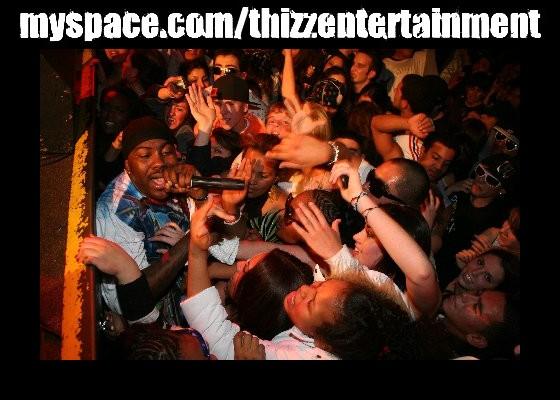
Mistah FAB Live in Santa Cruz


I picked Keak Da Sneak's Santa Cruz show in February, 2006 as my favorite live show of the year for one reason: energy.

The vibe of that night was unmatched, as more than 900 crazed lunatics filled the Catalyst with a sonic swell of good vibes, dancing, stunting, and going dumb until the walls started to sweat. The top pick was a no-brainer.

So Saturday night's Mistah FAB show came with a lot of anticipation on my part. I wanted to know if FAB could match the frenetic chaos of that Saturday night in February. FAB's show was sold-out well in advance, so the crowd was going to show up. It was all on FAB's husky shoulders to deliver.

Replete in an airbrushed XXXL white-tee — the colorful, detailed design centered on wicked looking yellow bus driven by the late great Mac Dre — FAB showed up promptly for his 10 p.m. set time to a heroe's welcome. Opening act Ashkon did a serviceable job of warming up the crowd, but there was no question who the audience was there to see.

FAB came out to the Jim Jones single of the moment "We Fly High," and then switched up into his regional interpolation "Stupid, Dumb ,Hyphy," which borrows elements of Dem Franchise Boyz "Lean Wit It..." The crowd instantly went into full-hyphy mode, dancing with a reckless abondon not unlike prisoners rioting in the yard. A fight actually broke out, the bouncers having a tough time of separating the two females engaged in hand tohand combat (that was the only incident of the night, luckily).

The thing I like most about FAB is he can rap, flat out. A reformed backpack rapper who was smart enough to use his skills to write hook-friendly radio songs and hood anthems that didn't compromise his craft, FAB dug deep into his catalogue to serve up underground favorites. His revision of Young Joc's "It's Goin' Down," was a Yay Area jack move, and that's a good thing.

Another local fav, "Metros and Chirpers," kept the energy going because FAB can rap about anything and keep heads nodding.

One of the highlights of FAB's set was the endless pool of regional remixes he's figured in. Northern Cali anthems like The Wolfpack's "Vansn" and Hoodstars "Grown Man On" were flipped so FAB could spit his 16, which brought a nice, all-encompassing vibe to the set.

As the night progressed, FAB seemed to get aggitated, although it was hard to tell exactly why. At one point, he called out his hype man for caring more about talking to his homies on stage than performing. At another instance, he was visibly upset when his Thizz Nation cohorts PSD and J-Diggs took the stage to perform a mini-set.

But FAB recovered to engage the crowd with not one, but two freestyles. The first was a stream of consciousness rant that skipped over three different beats and lasted about five minutes. When the DJ mistakenly threw on a Beyonce beat, FAB demanded the track be cut but continued to freestyle. This guy can go for days.

The latter portion of the show was all about his hits. Starting with the Too Short collab "Side Show," FAB brought the house down one joint at a time, like a veteran showman. His street anthem "Super Sik Wit It" had the floor shaking, as the crowd chanted the "Scraper, Scraper" chorus to glorious effect. The stage was set for FAB's biggest hit, "Ghostride It," which he performed not once, but twice. The mindless posturing of the crowd mixed with its insidious energy promped FAB to perform the song twice, the second time with him in the crowd.

FAB ended the set with a well-intentioned, heartfelt freestyle that featured a lot of meaningful wordplay about why he does what he does. He rapped about doing it for Mac Dre, Jam Master Jay, and all of hip-hops fallen soldiers. He rapped about being blamed for the deaths of two people who were killed while ghostriding, the dangerous car stunt he celebrates in his hit single.

Most of all, he rapped about his love for his art, his people and himself, which was a perfect way to end the set. He went about five minutes over his time limit, but I don't think even the sound guys minded, as they allowed him to complete the acapella rap.
The energy of the night demanded closure, and FAB delivered.

Read more!